WhatsApp:+86 15626945905
Choosing the right fabric is one of the most important decisions when developing a custom outdoor dog harness. The material affects durability, comfort, breathability, water resistance, weight, appearance, manufacturing cost, and ultimately how the product performs in real outdoor environments.
For pet brands, wholesalers, distributors, and product developers, the “best” dog harness material depends on the intended application. A lightweight summer harness requires a different material combination from a heavy-duty working dog harness or a premium hiking harness.
At Petop Outdoors, we specialize in OEM and ODM manufacturing of outdoor pet gear, including custom dog harnesses, outdoor dog beds, dog leashes, dog collars, and agility equipment. With extensive experience in outdoor pet product development, we help brands select suitable fabrics, webbing, mesh, padding, hardware, and construction methods according to their target market and product requirements.
Quick Answer: What Is the Best Fabric for an Outdoor Dog Harness?
There is no single fabric that is best for every outdoor dog harness.
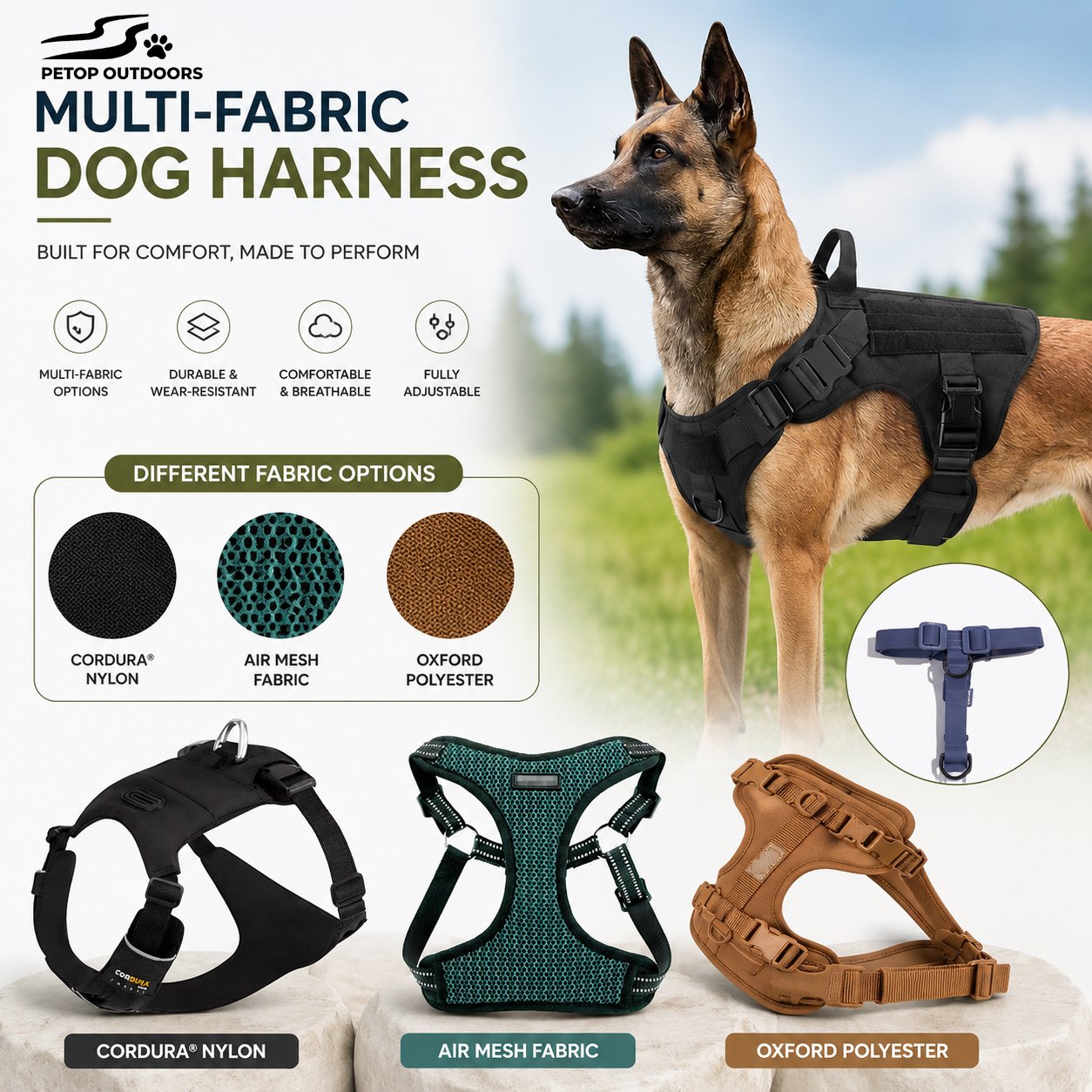
For most outdoor applications, 500D nylon and 600D Oxford polyester are practical choices because they offer a good balance of durability, weight, customization, and cost.
For premium outdoor and high-abrasion applications, Cordura® or high-quality Cordura-style nylon can provide enhanced durability and a technical outdoor appearance.
For hot-weather and long-duration activities, 3D spacer mesh is often used in body-contact areas to improve breathability and comfort.
For waterproof or easy-clean products, TPU/PVC-coated fabrics or webbing can be considered depending on the product construction.
The key is not simply choosing one fabric, but creating the right material combination for the intended use.
What Factors Should You Consider When Choosing Dog Harness Fabric?
Before selecting a material, pet brands should consider at least six factors.
1. Durability and Abrasion Resistance
Outdoor dog harnesses can be exposed to rocks, branches, dirt, sand, moisture, and repeated pulling. If the harness is designed for large dogs, hiking, working dogs, or adventure activities, abrasion resistance becomes particularly important.
2. Breathability
A harness that is durable but poorly ventilated may become uncomfortable during extended outdoor activities.
For hot climates or active dogs, breathable mesh should be considered in areas that directly contact the dog’s body.
3. Weight
Material weight directly affects the overall weight of the harness.
For small dogs and long-distance hiking, lightweight fabrics and webbing can improve comfort. For working dogs, durability and load-bearing performance may be more important than minimizing weight.
4. Water and Dirt Resistance
Outdoor products may encounter rain, mud, wet grass, beaches, and other challenging environments.
Water-resistant coatings and easy-clean materials can make a harness more practical for outdoor use.
5. Brand Positioning
A premium outdoor brand may prioritize technical fabrics, advanced coatings, branded materials, and high-end hardware.
A mass-market or entry-level brand may prioritize cost efficiency while maintaining adequate durability.
6. Manufacturing and Customization
Not every fabric is equally easy to cut, sew, print, laminate, or combine with other materials.
During OEM development, fabric selection should therefore be evaluated together with the entire product construction.
Common Fabrics Used for Outdoor Dog Harnesses
1. 600D Oxford Polyester
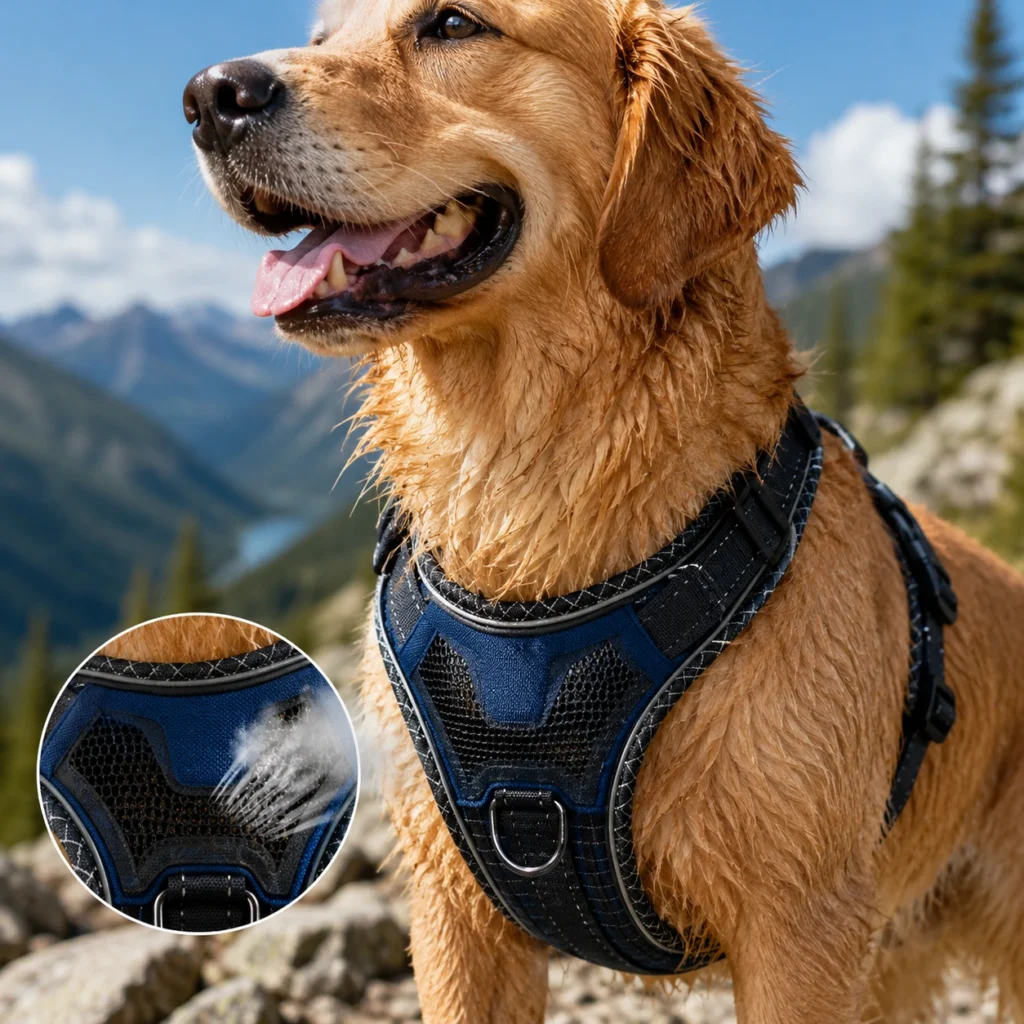
600D Oxford polyester is one of the most common materials used for outdoor pet products.
It provides a practical balance between durability and production cost, making it suitable for everyday outdoor dog harnesses and mid-range products.
Advantages
Good abrasion resistance
Relatively lightweight
Cost-effective
Wide range of colors
Suitable for printing and branding
Can be treated with PU coating
Easy to source for OEM production
A PU-coated 600D Oxford fabric can provide improved water resistance and easier surface cleaning.
Best for:
Everyday outdoor harnesses
Hiking and camping
Private-label products
Mid-range pet brands
Cost-sensitive OEM projects
For new brands entering the outdoor pet market, 600D Oxford is often a practical starting material.
2. 500D Nylon
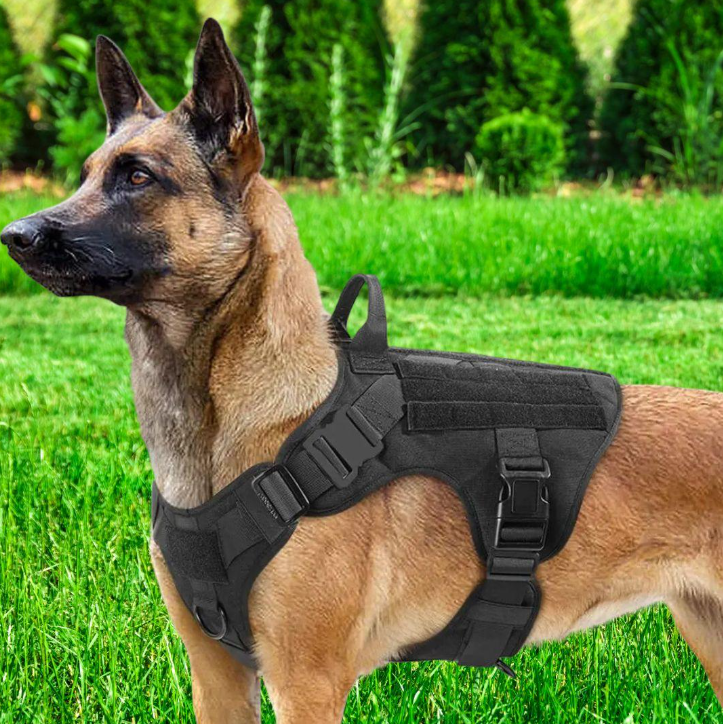
500D nylon is another popular choice for technical outdoor dog harnesses.
Compared with many standard polyester fabrics, high-quality nylon can offer excellent abrasion resistance while keeping the product relatively lightweight.
This makes it suitable for active dogs and demanding outdoor applications.
Best for:
Hiking dog harnesses
Adventure dog gear
Large-dog harnesses
Working-dog products
Premium outdoor collections
500D nylon can also be combined with PU coating when additional water resistance is required.
For brands that want a more technical appearance and performance-oriented product, 500D nylon is often a strong option.
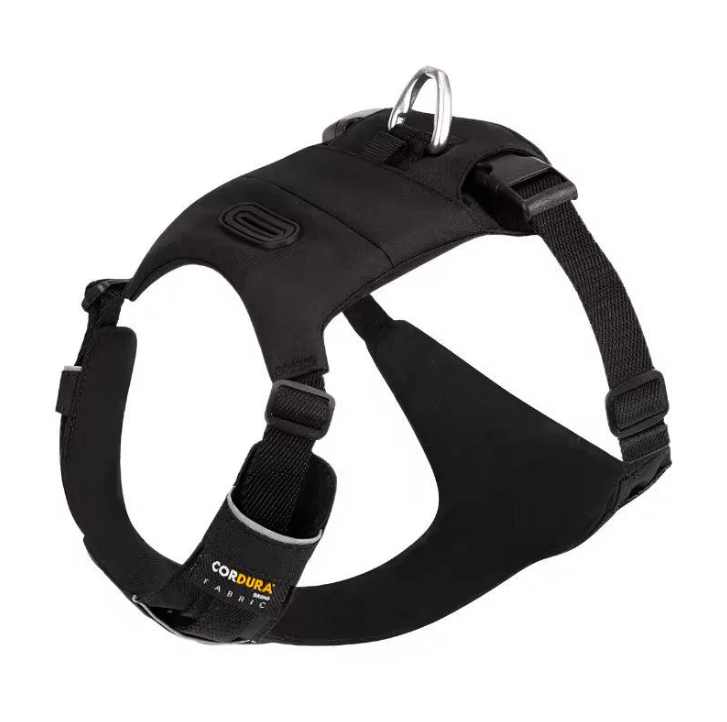
3. Cordura® and Cordura-Style Nylon
For premium outdoor dog gear, Cordura® fabrics are well known for their durability and technical outdoor positioning.
However, genuine branded technical fabrics can significantly increase material costs.
For some brands, high-quality Cordura-style nylon can provide an attractive balance between durability, appearance, and budget.
When should a brand consider Cordura®?
Cordura® can be appropriate when:
- The product is positioned as premium outdoor gear
- Abrasion resistance is a major selling point
- The target customers are hikers or outdoor enthusiasts
- The brand wants a recognizable technical-material story
When might Cordura-style nylon be more practical?
For emerging brands, private-label products, or projects with tighter cost targets, a high-quality 500D nylon with appropriate coating may offer a more practical solution.
The best material should always be selected according to the product’s actual requirements rather than simply choosing the most expensive fabric.
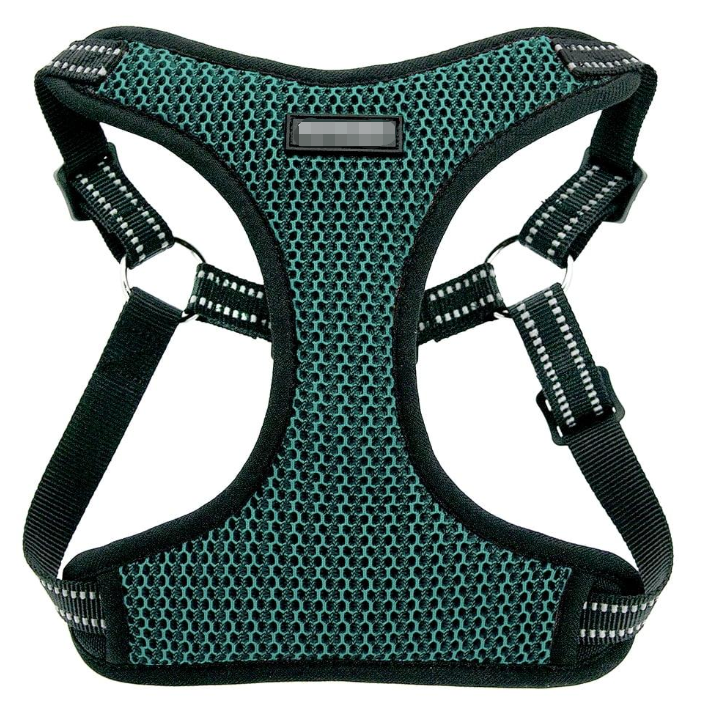
4. 3D Spacer Mesh
Fabric durability is only one part of dog harness design. The material touching the dog’s body also plays an important role in comfort.
3D spacer mesh is commonly used as a breathable lining or padded contact layer.
Its three-dimensional structure creates space between the fabric layers, helping improve airflow while providing cushioning.
Suitable applications:
Hot-weather dog harnesses
Hiking harnesses
Lightweight outdoor harnesses
Long-duration activities
Products for warm climates
For markets such as Australia, Southeast Asia, the Middle East, and other warm regions, breathable construction can be an important product feature.
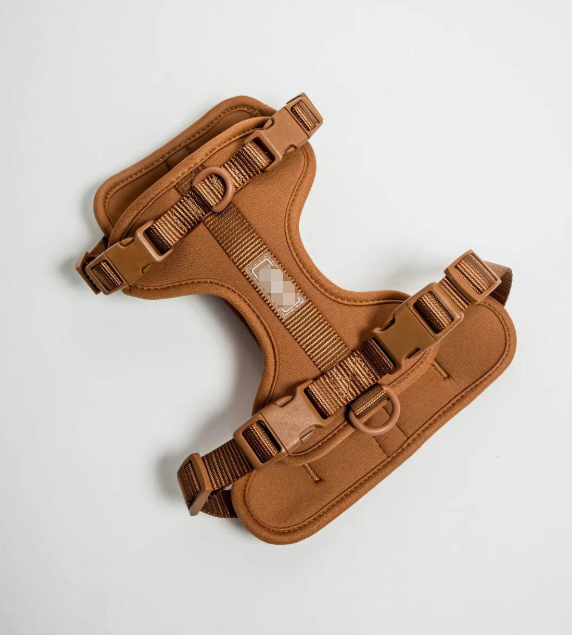
5. Neoprene
Neoprene is commonly used as a soft padding or comfort layer rather than the primary load-bearing material.
It can be combined with:
Outer fabric + Neoprene padding + Mesh lining + Structural webbing
This construction can provide a comfortable contact surface while maintaining a durable external structure.
However, too much neoprene can reduce breathability. For hot-weather products, the thickness and placement should therefore be carefully considered.
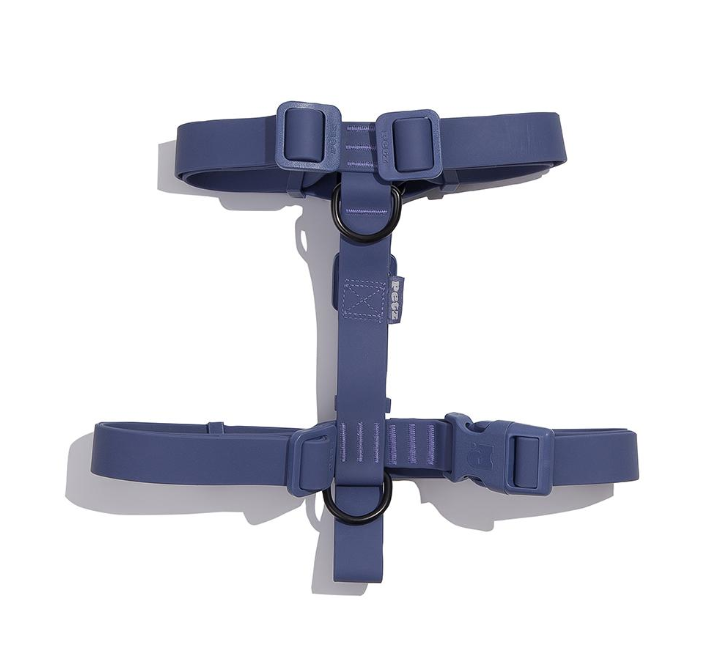
6. TPU and PVC-Coated Materials
For waterproof or easy-clean outdoor pet products, TPU- or PVC-coated fabrics and webbing can be considered.
These materials can offer:
Water resistance
Easy cleaning
Dirt resistance
Modern technical appearance
Suitability for wet outdoor environments
They can be useful for beach, rainy-weather, mud, and adventure products.
However, coated materials can feel less breathable or less flexible than conventional textiles. They should therefore be combined with suitable mesh or padding when used in body-contact areas.
What Fabric Is Best for Different Types of Dog Harnesses?
Instead of asking “Which fabric is best?”, OEM buyers should ask:
“Which material combination is best for my target product?”
For Everyday Outdoor Dog Harnesses
A practical combination is:
600D Oxford + polyester/nylon webbing + breathable mesh
This provides a good balance between cost, durability, comfort, and customization.
For Hiking and Adventure Harnesses
Consider:
500D nylon + 3D spacer mesh + high-tenacity webbing
This combination focuses on abrasion resistance, comfort, and outdoor performance.
For Premium Outdoor Dog Harnesses
Consider:
Cordura® or high-quality Cordura-style nylon + spacer mesh + reinforced webbing + premium hardware
This construction can support a higher-end product positioning.
For Working and Large Dogs
The focus should shift toward:
Durable outer fabric + high-strength webbing + reinforced stitching + reliable hardware
Fabric alone does not determine the strength of a dog harness. The load-bearing structure must be engineered as a complete system.
For Hot-Weather Harnesses
Consider:
Lightweight outer fabric + 3D spacer mesh + lightweight structural webbing
The goal is to reduce unnecessary weight while improving ventilation around the dog’s chest and body.
For Waterproof Outdoor Products
Consider:
Coated fabric or webbing + breathable mesh lining + suitable reinforcement
This approach can provide better protection from moisture while maintaining reasonable comfort.
Fabric Is Only One Part of a High-Quality Dog Harness
One common mistake in dog harness development is focusing too heavily on the outer fabric.
A professional custom dog harness should be evaluated as a complete system:
Fabric + Webbing + Padding + Mesh + Hardware + Stitching + Load-Bearing Structure
At Petop Outdoors, our OEM/ODM development process considers these components together.
For example, a premium hiking dog harness may use:
- 500D technical nylon for the outer shell
- 3D spacer mesh for breathable contact areas
- High-tenacity webbing for structural support
- Reinforced stitching at stress points
- Durable metal or plastic hardware
- Customized logo and labeling
- Brand-specific colors and packaging
The exact construction can be adjusted according to the dog’s size, intended activity, target market, and product positioning.
How Does Fabric Selection Affect Dog Harness Cost?
Material selection has a direct impact on the final OEM manufacturing cost.
However, the most expensive material is not necessarily the most cost-effective choice.
For example, a new outdoor pet brand may not need genuine premium branded fabric for every component. A carefully selected 500D nylon or 600D Oxford fabric may provide sufficient performance while allowing the brand to maintain a competitive retail price.
Other factors affecting the cost of a custom dog harness include:
- Fabric specification
- Fabric coating
- Webbing type
- Hardware material
- Number of adjustment points
- Padding construction
- Logo method
- Custom colors
- Packaging
- Product complexity
- Order quantity
This is why material selection should be discussed with the manufacturer before finalizing the product specification.
Why Work With an Experienced Custom Dog Harness Manufacturer?
Developing a successful outdoor dog harness involves more than selecting a fabric from a material catalog.
An experienced OEM/ODM manufacturer can help evaluate whether the selected fabric works with the proposed:
- Pattern structure
- Webbing system
- Padding thickness
- Hardware
- Sewing process
- Logo application
- Reinforcement points
- Target production quantity
At Petop Outdoors, we provide custom dog harness development and manufacturing for pet brands, wholesalers, distributors, and product developers.
Our capabilities cover different outdoor harness structures, materials, colors, branding methods, hardware options, and functional requirements.
Whether you are developing a hiking dog harness, premium outdoor harness, large-dog harness, working-dog harness, tactical-style harness, or private-label collection, we can help turn your product concept into a manufacturable product.
Start Your Custom Dog Harness Project
Choosing the right fabric is the first step toward building a durable, comfortable, and commercially successful outdoor dog harness.
If you already have a tech pack, product sketch, reference sample, material specification, or simply an idea, our team can help evaluate suitable materials and construction options for your project.
Contact Petop Outdoors to discuss your custom dog harness requirements, material options, sampling, OEM/ODM manufacturing, and private-label development.
Frequently Asked Questions About Outdoor Dog Harness Fabrics
1. What is the best fabric for an outdoor dog harness?
There is no universal best fabric. 500D nylon and 600D Oxford polyester are widely used because they provide a good balance of durability, weight, customization, and cost. Premium products may use Cordura® or Cordura-style nylon, while breathable designs often incorporate 3D spacer mesh.
2. Is 500D nylon good for outdoor dog harnesses?
Yes. High-quality 500D nylon is a strong option for hiking, adventure, working-dog, and premium outdoor harnesses because it can provide excellent abrasion resistance while keeping the product relatively lightweight.
3. Is 600D Oxford polyester suitable for dog harnesses?
Yes. 600D Oxford polyester is a practical choice for everyday and mid-range outdoor dog harnesses. With PU coating, the fabric can offer improved water resistance and easier cleaning.
4. What is the best material for a breathable dog harness?
3D spacer mesh is a popular choice for breathable contact areas because its three-dimensional structure allows airflow and provides cushioning. It is commonly combined with nylon or polyester outer fabrics.
5. What materials are recommended for hot-weather dog harnesses?
Hot-weather harnesses should prioritize lightweight construction and breathable contact materials. A lightweight nylon or polyester outer fabric combined with 3D spacer mesh can provide a practical balance between durability, weight, and ventilation.
6. Can Petop Outdoors customize the fabric and materials of dog harnesses?
Yes. Petop Outdoors provides OEM and ODM custom dog harness manufacturing. Brands can customize fabrics, colors, webbing, padding, hardware, logos, labels, packaging, and construction details according to their product requirements and target market.