

WhatsApp:+86 15626945905
Introduction: The Walking Dilemma
Bringing a new puppy home is one of life’s greatest joys. But the first time you clip a leash onto their collar, you might notice something concerning: the coughing, the hacking, or the choking sound as they pull forward to explore the world.
As a dog owner, you want to protect your furry friend. This leads to the age-old debate: Dog Harness vs. Collar.
While collars are traditional and convenient for ID tags, modern veterinary science suggests they might not be the best choice for walking—especially for energetic puppies or smaller breeds. In this guide, we’ll dive deep into the mechanics of canine anatomy to help you decide which gear is safest for your puppy’s sensitive neck.
The Hidden Dangers of Walking on a Collar
To understand why this matters, we have to look at anatomy. Unlike humans, dogs carry their heads horizontally. Their throat area contains vital structures: the trachea (windpipe), the esophagus, the thyroid gland, and major blood vessels.
1. The Risk of Tracheal Collapse
This is the number one concern for small breeds (like Chihuahuas, Yorkies, and French Bulldogs). When a dog pulls on a collar, 100% of that pressure is concentrated on the front of the throat. Over time, this can weaken the tracheal rings, leading to a chronic “honking” cough or difficulty breathing.
2. Increased Eye Pressure
Surprisingly, studies have shown that the pressure generated by a collar can actually increase intraocular pressure. For breeds prone to eye issues (like Pugs or Shih Tzus), this is a significant risk factor.
3. Neck Injuries
Sudden jerks—whether from the dog lunging at a squirrel or you pulling them back from traffic—can cause whiplash-like injuries to the vertebrae when the force is applied solely to the neck.
Why a Dog Harness is the Safer Alternative
Transitioning to a harness changes the physics of the walk entirely.
Force Distribution
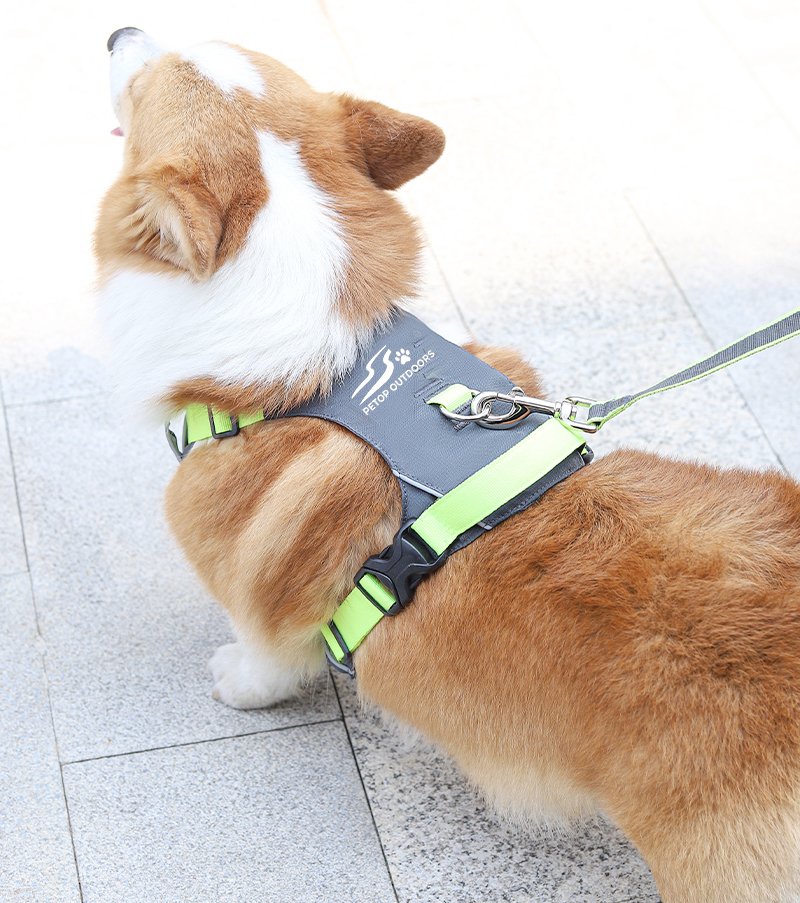
A well-designed harness bypasses the neck entirely. When your puppy pulls, the force is distributed across the chest and shoulders—the strongest parts of their body. This design prevents choking and protects delicate throat structures.
Better Control for Training
Puppies are energetic and easily distracted. A harness gives you a center of gravity point (usually on the back or chest) that makes it easier to guide their movement without hurting them.
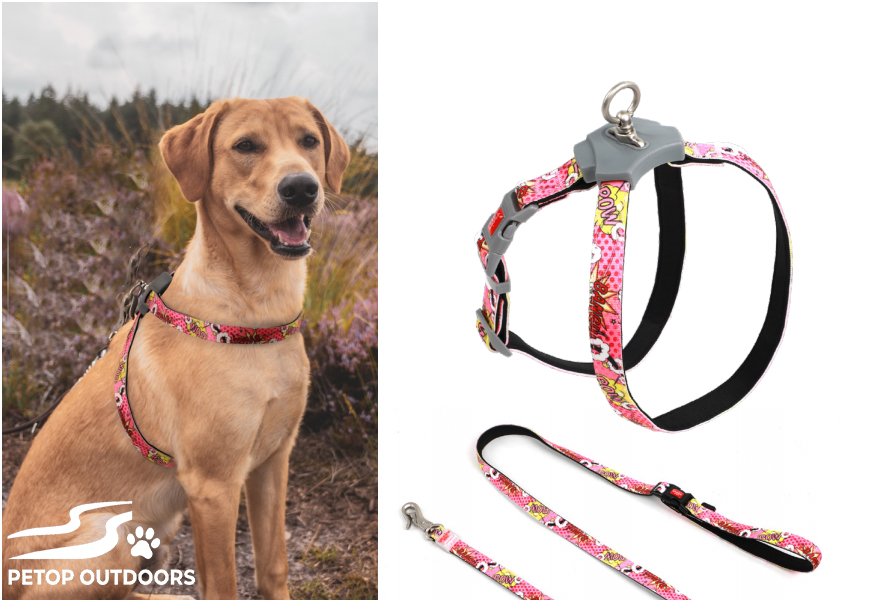
Factory Insider Tip: Look for harnesses with a “Y-shape” front design. This ensures the straps sit on the shoulder muscles, not the soft tissue of the throat, and allows full range of motion for the front legs.
| Feature | Dog Collar | Dog Harness |
| Primary Use | Holding ID tags & Vaccination info | Walking, Hiking, & Training |
| Pressure Point | Neck & Throat (High Risk) | Chest & Shoulders (Safe) |
| Control Level | Low (easy to slip out of) | High (secure) |
| Ideal For | All-day wear inside the house | Outdoor activities & Adventures |
| Vet Recommendation | Generally No (for walking pullers) | Yes (Standard of Care) |
When Should You Use a Collar?
We aren’t saying you should throw your collars away. Collars are essential for identification.
The Golden Rule: Keep a lightweight collar on your dog for their ID tags and registration, but clip the leash to the harness for the actual walk.
Choosing the Right Harness: Material Matters
As a manufacturer, we know that not all harnesses are created equal. The difference often lies in the materials and construction.
Breathable Mesh: Ideal for everyday walks. It’s soft, lightweight, and prevents overheating.
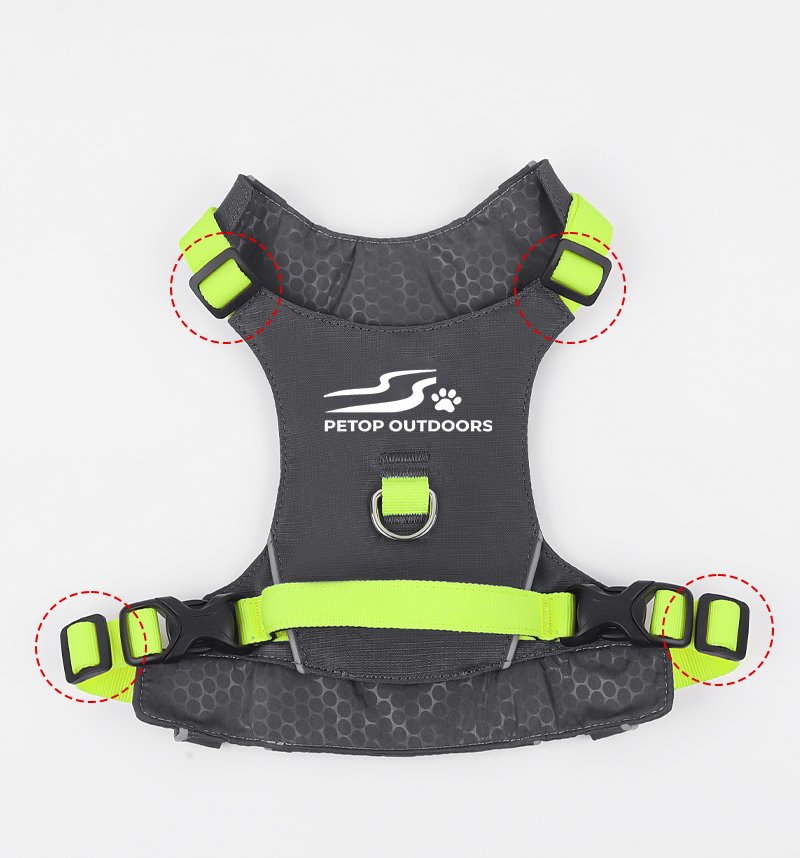
Nylon Webbing: Best for durability and adjustability.
Padding: Essential to prevent chafing under the armpits.
Planning an Outdoor Adventure? If you are taking your dog on long hikes or camping trips, comfort is key. After a long day of hiking in a secure harness, your dog needs a dedicated spot to recover. Consider bringing a portable Outdoor Folding Dog Bed to keep them off the cold, hard ground during rest stops.
Harnesses and Agility Training
If you are planning to train your dog for sports or agility, a harness is non-negotiable. You cannot run an agility course with a leash attached to a collar—it’s dangerous.
Using a harness allows you to guide your dog through obstacles safely. If you’re interested in building your dog’s confidence and fitness, check out our starter Dog Agility Training Kits. They work perfectly with our active-wear harnesses to create a safe, fun training environment.
Conclusion: Safety First
So, is a harness safer than a collar? The answer is a resounding Yes.
For walking, hiking, and training, a harness is the responsible choice to protect your puppy’s long-term health. It prevents neck injuries, offers better control, and makes the walk more enjoyable for both of you.
Ready to upgrade your walking gear? Browse our factory-direct collection of ergonomic No-Pull Dog Harnesses today. Designed with durability and safety in mind, we help you walk with confidence.
FAQ: Keeping Your Puppy Safe & Comfortable
- At what age should my puppy start wearing a harness?
Puppies can start wearing a harness as early as 8 weeks old. In fact, starting early is recommended for “desensitization”—getting them used to the feeling of gear. Since puppies grow rapidly, we recommend choosing a harness with at least 4 adjustment points to accommodate their growth spurts without needing a replacement every month.
- Can a harness cause skin irritation or chafing under my puppy’s armpits?
Chafing usually happens due to poor fit or cheap, rough materials. To prevent this, ensure you can fit two fingers between the harness and your dog’s skin. Our factory-direct harnesses use soft-edge binding and breathable air mesh specifically designed to reduce friction against sensitive puppy skin.
- Will using a harness make my dog pull more?
This is a common myth! While some “back-clip” harnesses can trigger a dog’s opposition reflex (making them pull harder), a “No-Pull” front-clip harness actually does the opposite. It redirects their momentum and gives you more control, making it a safer and more effective tool for loose-leash training.
- Is it safe to leave a harness on my puppy all day?
While our harnesses are designed for maximum comfort, we recommend taking them off when your puppy is unsupervised or indoors for long periods. This prevents the fur from matting, allows the skin to breathe, and ensures your puppy doesn’t chew on the straps. For indoor lounging, your puppy will be much more comfortable on a dedicated [Outdoor/Indoor Folding Dog Bed].
- How do I know if the harness is too tight or too loose?
The “Two-Finger Rule” is the industry standard. After bucking the harness, slide two fingers under any strap. If you can’t fit them, it’s too tight; if you can fit three or more, it’s too loose and your puppy might slip out. A proper fit is essential for distributing pressure away from the neck.
- Why should I choose a factory-direct harness over a cheap one from a supermarket?
As a source manufacturer, we control the quality of the “stress points.” Most cheap harnesses fail at the buckles or D-rings under sudden tension. Our harnesses use load-tested zinc alloy hardware and reinforced stitching that you won’t find in mass-market retail versions, ensuring the ultimate safety for your puppy’s neck and spine.