
WhatsApp:+86 15626945905
Developing a custom dog harness starts long before the first sample is made.
For pet brands, retailers, and product developers, a clear dog harness tech pack helps a manufacturer understand the product concept, materials, dimensions, functions, branding, and production requirements. The better the information provided before prototyping, the easier it is to reduce misunderstandings, control development costs, and move efficiently from concept to production.
However, not every brand has a complete technical package ready. An experienced dog harness manufacturer can also help turn an initial sketch, reference product, or unique idea into a workable prototype.
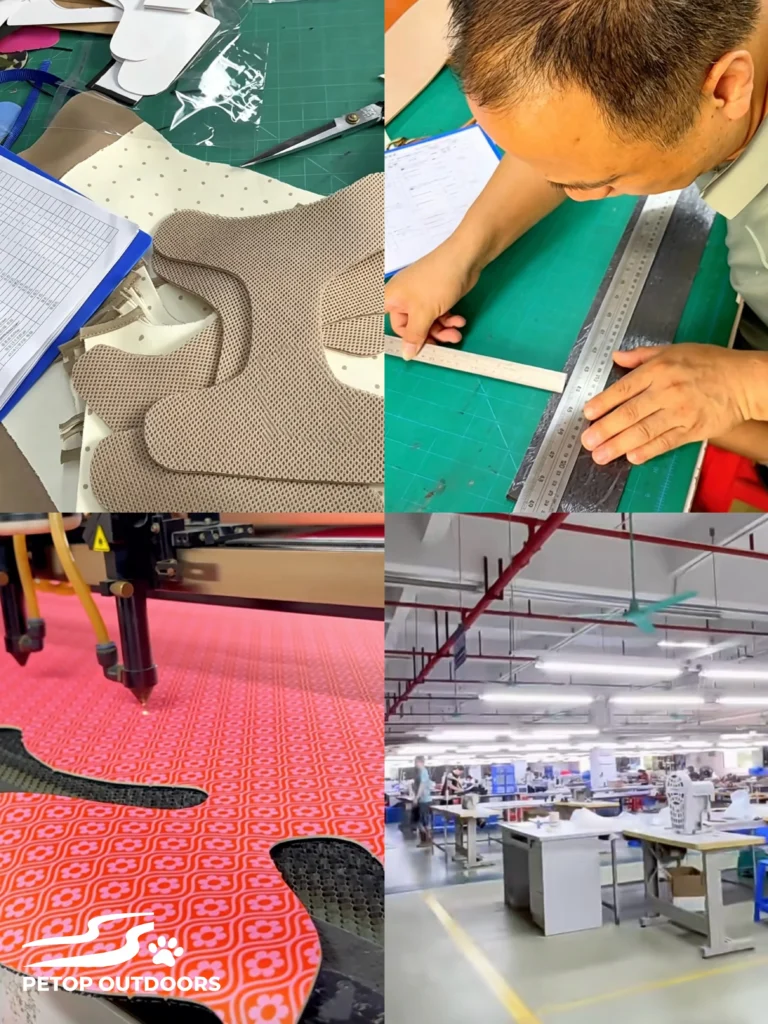
At Petop Outdoors, we have 11 years of manufacturing experience in outdoor pet products, including custom dog harnesses, collars, leashes, outdoor dog beds, and other functional pet gear. We support brands from early-stage product development through prototyping, testing, and bulk production.
So, what should a pet brand prepare before developing a new dog harness?
1. Product Concept, Sketches or Reference Images
Start by showing the manufacturer what you want to create.
Your tech pack can include:
- Front, back, side, and top views
- Product sketches or CAD drawings
- Reference product photos
- Similar products already on the market
- Notes showing which features should be retained or changed
You do not necessarily need professional technical drawings at the beginning.
A hand-drawn sketch or collection of reference images can already help an experienced manufacturer understand your concept.
For example, if you want to develop a multi-functional outdoor dog harness, you may indicate requirements such as a top control handle, multiple leash attachment points, MOLLE-style webbing, reflective elements, or additional accessory attachment points.
The manufacturer can then help evaluate whether the concept is practical for production.
2. Size Chart and Key Measurements
Measurements are one of the most important parts of a dog harness tech pack.
Depending on the design, you may need to provide:
- Neck circumference
- Chest girth
- Back length
- Strap width
- Padding thickness
- Adjustment range
- D-ring position
- Handle dimensions
- Buckle position
For multiple sizes, include a complete size chart and, if possible, the recommended dog weight or body measurements for each size.
If certain measurements have not been finalized, simply mark them as TBD.
This allows the manufacturer to recommend practical dimensions based on existing production experience.
3. Material Specifications
A good tech pack should identify the preferred materials for the main components.
For an outdoor dog harness, this may include:
- Main fabric
- Breathable lining or air mesh
- Padding
- Webbing
- Buckles
- D-rings
- Hook-and-loop materials
- Reflective materials
- Handle materials
For example, a brand may request 500D Cordura-style fabric for durability, breathable mesh for comfort, and EVA padding for cushioning.
However, you do not always need to know the exact material before contacting a manufacturer.
Material selection often involves balancing durability, weight, comfort, appearance, water resistance, availability, and target cost.
At Petop Outdoors, we can evaluate your preferred material and suggest alternatives when a different fabric, webbing, hardware, or padding structure may provide a better balance between performance and production cost.
4. Functional Requirements and Intended Use
This is one area that is often missing from incomplete tech packs.
Tell your manufacturer how the harness will be used.
For example:
- Daily walking
- Running
- Hiking
- Camping
- Outdoor adventures
- Working dogs
- Tactical applications
- Car travel
- No-pull control
- Lift-assist applications
The intended use affects the entire construction of the product.
A harness designed for everyday walking may require a different webbing and hardware configuration from a harness designed for working dogs or outdoor activities.
For higher-load applications, the manufacturer may also need to consider reinforcement stitching, bartack positions, load-bearing components, D-ring construction, and tensile testing requirements.
5. Logo, Colors and Branding Requirements
If you are developing a private-label dog harness, prepare your branding information as early as possible.
Ideally, provide:
- Vector logo
- Pantone colors
- Logo dimensions
- Logo position
- Label requirements
- Care label information
- Hangtags
- Packaging requirements
- Barcode/SKU information
For logos, AI, EPS, SVG, or other editable vector formats are preferred.
The logo application method should also be considered during development. Depending on the design, options may include silicone patches, woven labels, embroidery, printing, or molded components.
For small or detailed logos, the manufacturing method can affect readability, durability, appearance, and cost. An experienced factory can help recommend a suitable solution.
6. Reference Sample or Existing Product
If your brand already has a harness that fits well, sending a physical reference sample can make development much more efficient.
A manufacturer can evaluate:
- Construction
- Measurements
- Fabric
- Padding
- Webbing
- Hardware
- Stitching
- Adjustment system
- Attachment points
The goal is not necessarily to copy the existing product. Instead, the reference sample gives the factory a clearer understanding of the expected fit, quality level, and functional requirements.
This can be particularly useful when developing an improved version of an existing product.
7. Target Price, MOQ and Development Timeline
Commercial information is also important during product development.
If possible, provide:
- Target factory price
- Estimated order quantity
- Expected MOQ
- Number of sizes
- Number of colors
- Desired sample date
- Expected bulk production date
These factors can influence material selection and construction.
For example, a premium material may be technically suitable but may not fit the target retail positioning. A manufacturer can therefore suggest alternative materials or construction methods before the prototype is finalized.
8. What If You Don’t Have a Complete Tech Pack?
This is common among startups and growing pet brands.
You may only have:
“We want a lightweight outdoor harness with a comfortable handle, reflective details, and two leash attachment points.”
That can still be the starting point for development.
At Petop Outdoors, we work with brands at different stages of product development. You can provide a sketch, reference image, existing sample, specification list, or simply explain the product concept and target market.
Our manufacturing team can then help evaluate:
Concept → Material Selection → Construction → Prototype → Testing → Revision → Bulk Production
This is where an experienced OEM/ODM manufacturer can add value beyond simply producing an existing design.
From Dog Harness Idea to Production
A successful dog harness prototype is not only about having a detailed drawing. It requires communication between the brand and manufacturer about function, fit, materials, construction, branding, target cost, and production requirements.
With 11 years of manufacturing experience, Petop Outdoors provides OEM and ODM development support for brands looking to create custom outdoor pet products.
Our product capabilities include dog harnesses, collars, leashes, outdoor folding mats, beds, and other functional pet gear.
Whether you already have a complete tech pack or only have a new product idea, we can work with your requirements to develop a practical prototype and prepare it for production.
Have a new dog harness concept? Send us your tech pack, sketches, reference images, or product requirements to start a discussion about your next prototype.
FAQ: Dog Harness Tech Pack & Prototyping
1. What should be included in a dog harness tech pack?
A dog harness tech pack should normally include product drawings, measurements, size specifications, materials, hardware, construction details, functional requirements, branding information, packaging requirements, and testing specifications.
2. Can I develop a custom dog harness without a complete tech pack?
Yes. A complete tech pack is helpful but not always necessary. An experienced OEM manufacturer can work from sketches, reference photos, existing samples, or a written description of your product concept.
3. What information does a dog harness manufacturer need for prototyping?
The most important information includes the intended use, size and fit requirements, preferred materials, hardware, functional features, logo requirements, target price, estimated quantity, and development timeline.
4. Can a manufacturer recommend alternative materials for my dog harness?
Yes. Material alternatives can be evaluated based on durability, weight, comfort, appearance, water resistance, availability, and target cost. This can be particularly useful when the original material is expensive or difficult to source.
5. How many prototypes are usually needed before bulk production?
The number varies depending on product complexity. A first prototype may be used to evaluate the overall structure and appearance, while later samples may be required to adjust fit, materials, logo placement, hardware, or functional details before production approval.
6. Can Petop Outdoors develop completely new dog harness designs?
Yes. Petop Outdoors supports OEM and ODM development for brands with new product concepts, unique functions, or customized specifications. The development process can cover material selection, prototype development, revisions, testing, branding, packaging, and bulk manufacturing.