
WhatsApp:+86 15626945905
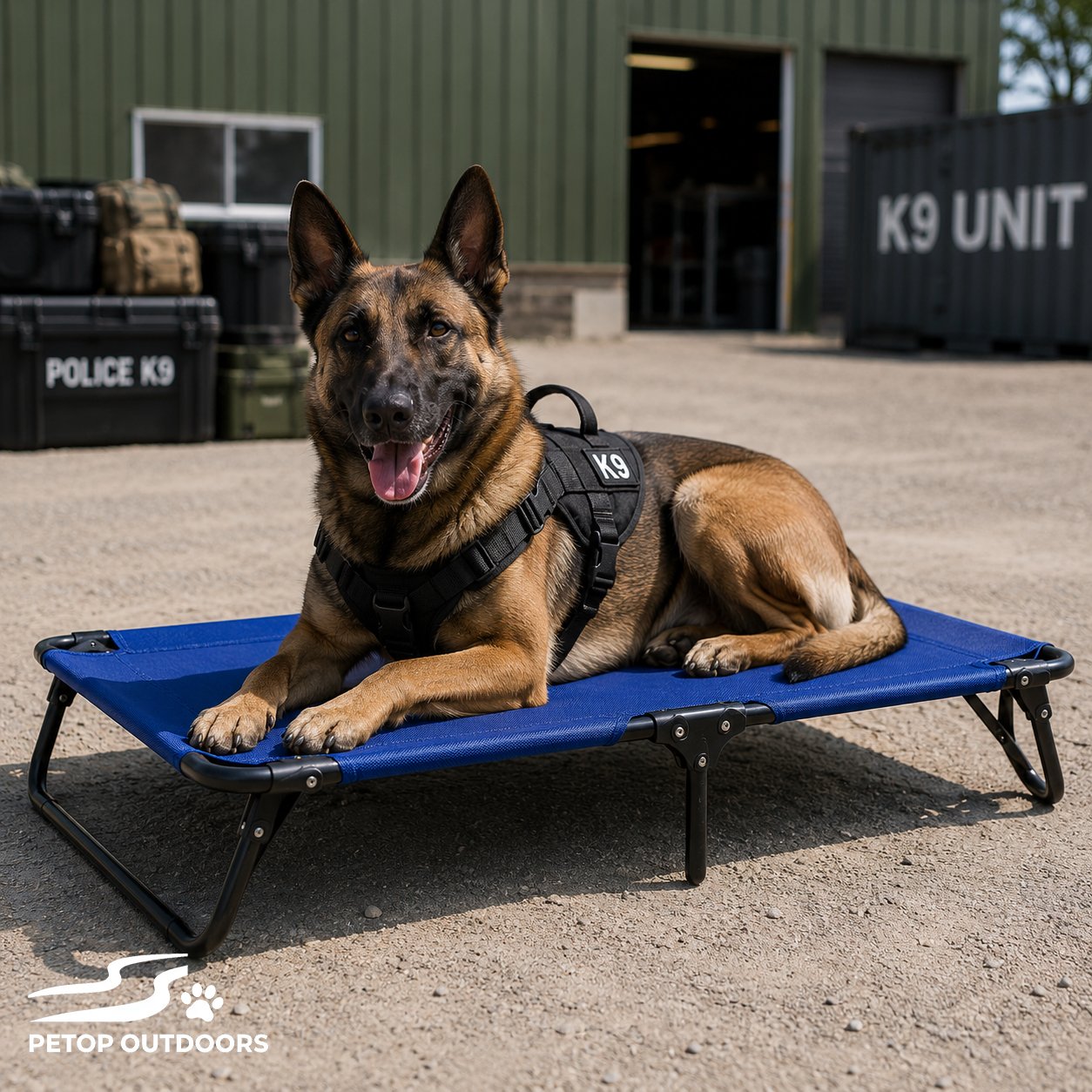
Working dogs (K9 units, search & rescue, herding) require rapid thermoregulation and joint decompression that standard foam beds cannot provide. Elevated dog beds built with high-tension Textilene mesh and anti-rust steel frames are the industry standard.
Whether deployed in law enforcement, search and rescue operations, or intense agility training, working dogs operate under extreme physical and psychological stress. For these high-drive canine athletes, a rest period is not simply downtime—it is a critical biomechanical recovery phase.
For pet brand founders and procurement directors, understanding why professionals demand elevated dog beds is the first step in developing a top-tier tactical pet gear line. Here is the science behind K9 recovery and what you need to know to manufacture products that meet these rigorous standards.
The Science of K9 Recovery: Why Elevated Beds are Mandatory
Standard plush or memory foam beds are designed for household comfort, not tactical recovery. Here is why canine professionals strictly utilize elevated folding camp beds:
1. Rapid Thermoregulation and Heat Dissipation
A working dog’s core temperature spikes significantly during high-intensity tasks. Traditional padded beds absorb and trap body heat, severely delaying recovery. Elevated beds feature high-tension, breathable mesh that allows continuous 360-degree airflow underneath the dog. This rapid heat dissipation prevents heat exhaustion and ensures the K9 is physically ready for their next deployment.
2. Orthopedic Joint Decompression
Navigating rough terrain and executing high jumps places immense sheer force on a dog’s elbows, hips, and spine. An elevated bed acts as a firm, taut trampoline. By evenly distributing the dog’s weight, it eliminates the hard pressure points caused by resting on concrete floors or flattened foam, actively reducing joint inflammation.
3. Field Hygiene and Environmental Protection
Working environments are unpredictable. A portable elevated bed keeps the dog off wet mud, freezing snow, and scorching asphalt. More importantly, elevating the resting area several inches above the ground significantly reduces exposure to ground-dwelling parasites like ticks, fleas, and ants.
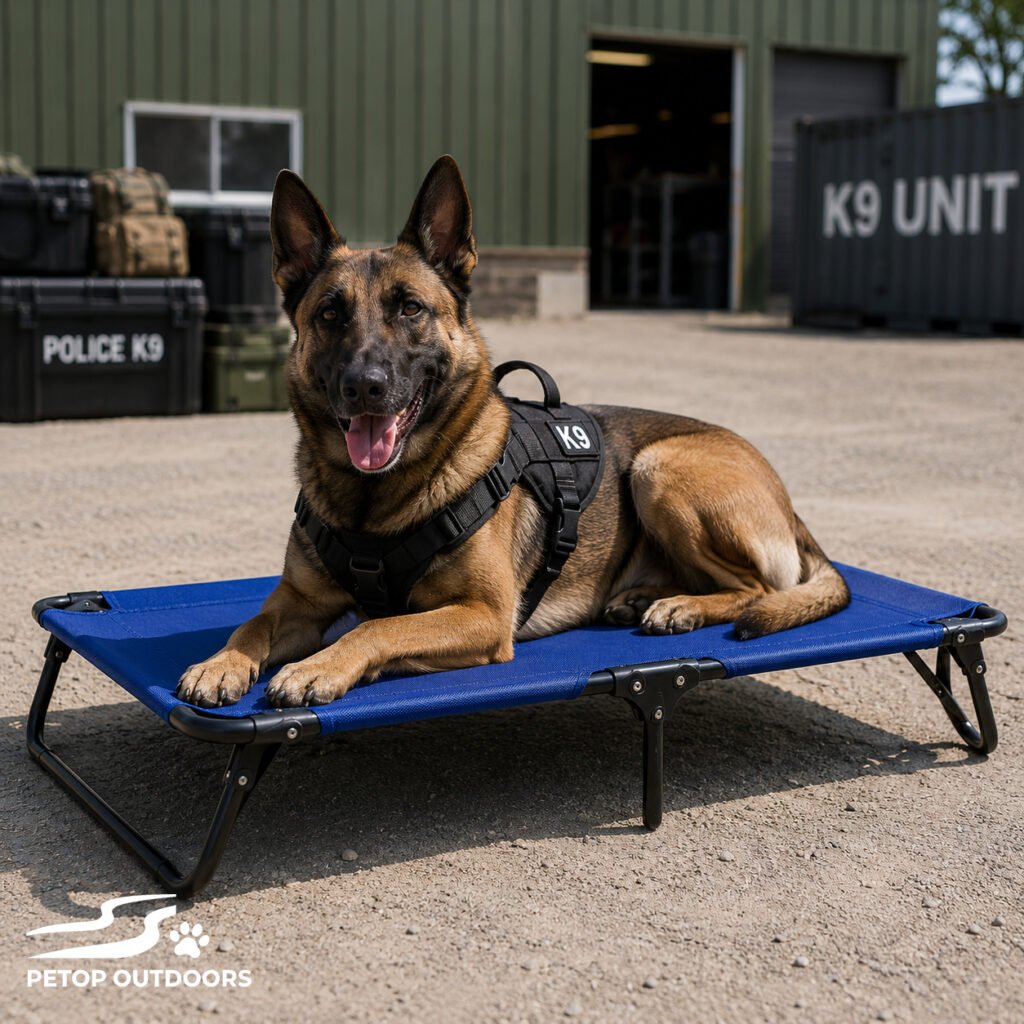
Translating Canine Needs into Manufacturing Specs
For a pet gear brand, knowing the benefits is only half the battle; translating those needs into a durable, sellable product is where your supply chain matters.
Here is how standard retail beds compare to the tactical-grade elevated beds demanded by professionals:
| Feature | Standard Retail Pet Bed | Tactical-Grade Elevated Bed |
| Primary Material | Cotton, memory foam, polyester | Textilene mesh, 600D+ Oxford cloth |
| Weight Capacity | 50 – 80 lbs (Prone to flattening) | 150+ lbs (High-tension support) |
| Cleaning Method | Machine wash (Requires drying time) | Hose down, wipe clean (Dries in minutes) |
| Chew Resistance | Low (Stuffing is easily destroyed) | High (Taut surface, no loose edges) |
| Best Application | Indoor household use | Field deployment, camping, agility training |
Petop Outdoors: Your Premium Integrated Production Partner
When targeting the lucrative outdoor and tactical pet gear market, consumer-grade manufacturing will compromise your brand’s reputation. You need a partner who understands industrial-grade durability.
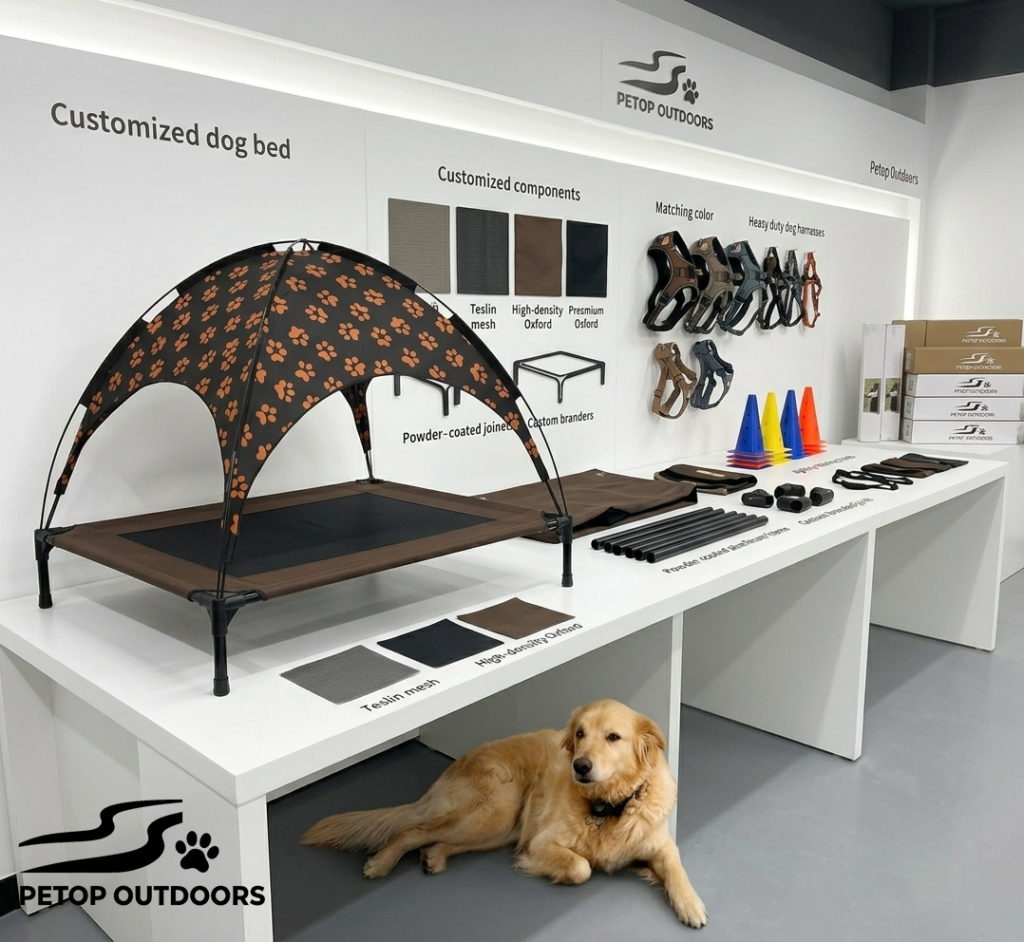
Operating from the Pearl River Delta—the world’s premier manufacturing hub—Petop Outdoors are a dedicated source factory and integrated production partner. We specialize in the OEM/ODM manufacturing of high-performance outdoor folding dog beds, tactical dog harnesses, and professional agility training equipment.
Why Leading Global Procurement Managers Partner With Us:
Material Engineering: We source ultra-durable, tear-resistant Textilene and high-denier Oxford fabrics paired with reinforced, anti-corrosion frames to pass strict static and dynamic load tests.
End-to-End Quality Control: From raw material inspection to pre-shipment load-bearing verification, our factory floor adheres to rigorous QC standards to eliminate return-rate risks for your brand.
Global Supply Chain Efficiency: We manage the complexities of international logistics, ensuring seamless export to North America, Europe, Australia, and beyond, keeping your inventory stable.
If you are a category manager looking to upgrade your outdoor K9 product line with a reliable, high-capacity manufacturer, we are ready to scale with you.
Contact the Petop Outdoors B2B Team Today to request a wholesale catalog, discuss custom OEM specifications.
Frequently Asked Questions (FAQ)
1. Why are elevated dog beds better for K9 thermoregulation?
Elevated dog beds are better for thermoregulation because they utilize breathable mesh fabrics and raise the dog off the ground, allowing for 360-degree airflow. This prevents body heat from being trapped against the dog, rapidly cooling their core temperature after intense physical exertion.
2. What materials should brand managers look for when sourcing heavy-duty dog beds?
Procurement managers should specify rust-resistant coated steel or lightweight aerospace aluminum for the frames, paired with high-tension Textilene mesh or heavy-duty Oxford cloth. These materials guarantee chew-resistance, weatherproofing, and high weight capacities.
3. How much weight must a working dog elevated bed support?
A commercial-grade elevated dog bed must support a static load of at least 150 lbs (68 kg). This high weight capacity is essential to safely support large working breeds like German Shepherds, Belgian Malinois, and Bloodhounds without the fabric sagging.
4. Can elevated folding beds be used in K9 agility training?
Yes, they are highly effective training tools. The distinct raised platform creates a clear physical boundary, making it an excellent tool for teaching the “place” command, impulse control, and providing a designated decompression zone during rigorous agility sessions.
5. How do elevated beds improve hygiene in outdoor deployments?
Elevated beds improve hygiene by keeping the dog suspended above mud, standing water, and dirty ground. Furthermore, the specialized mesh materials are non-absorbent, meaning mud, bacteria, and waste can be hosed off and dried within minutes in the field.