
WhatsApp:+86 15626945905
Quick Summary: What Makes a Dog Harness Truly Escape-Proof?
If your customer’s dog is a master escape artist (often called a “Houdini dog”), standard harnesses will fail. A genuinely escape-proof dog harness requires three non-negotiable structural elements:
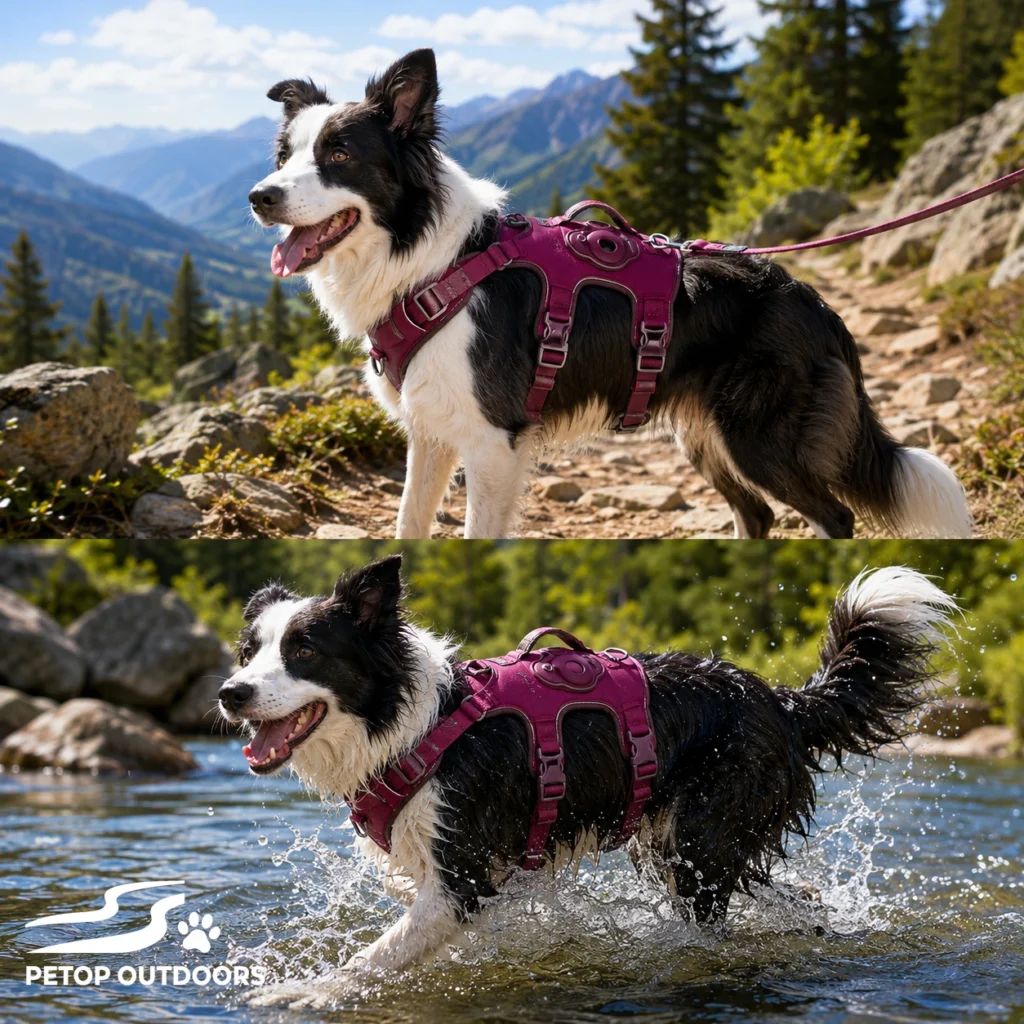
Extended 3-Strap Architecture: An additional belly strap that secures comfortably behind the ribcage, resting on the narrowest part of the dog’s waist.
Anti-Creep Auto-Locking Hardware: High-density POM or anodized aluminum sliders that do not loosen under sudden, multi-directional pulling.
Computerized Bar-Tack Seams: Programmable reinforcement stitching capable of exceeding 400+ lbs of tensile force without seam separation.
Introduction
Every outdoor pet brand encounters the “Houdini dog”—a canine with a deep ribcage and a slender waist (such as Greyhounds, Whippets, or clever rescue mixes) that can effortlessly back out of standard walking gear. When consumers search for escape-proof dog harnesses and how to keep their Houdini dog safe, they are desperately seeking an engineered solution that won’t fail during a high-stakes trail hike or city walk.
For pet gear brand founders and procurement managers, selling an escape-proof harness represents both a massive commercial opportunity and a severe brand liability. If a harness stretches, hardware slips, or stitching snaps, your brand faces devastating 1-star reviews and product recalls.
Here is an inside, factory-level look at the mechanical engineering behind truly escape-proof canine gear, and how choosing the right OEM manufacturing partner ensures zero-defect safety on the retail shelf.
The Geometric Physics of a Houdini Dog Escape
Why do dogs escape from traditional harnesses? It comes down to basic geometry. Standard 2-strap harnesses anchor around the base of the neck and directly behind the front legs (the widest part of the chest). When a panicked dog plants its front feet, lowers its head, and pulls backward, the harness simply slides forward over the ribcage like a loose sweater.
The Solution: The 3rd Belly Strap Intervention
To make a harness 100% escape-proof, a manufacturer must extend the chassis length and add a third circumferential strap. This final strap wraps securely around the dog’s lower abdomen—the narrowest section of the torso behind the wide ribcage. Because the ribcage acts as a physical barrier wider than the adjusted strap, it is anatomically impossible for the dog to back out of the gear.
Why Standard “Order-Taking” Factories Fail at Safety Gear
Understanding the 3-strap geometry is easy; manufacturing it flawlessly at scale is where 90% of generic pet gear suppliers fail. Unverified, reactive factories often treat safety harnesses like basic fabric sewing projects.
When brands partner with low-cost, passive factories, they encounter critical manufacturing flaws:
Webbing Creep (Hardware Slippage): Cheap plastic sliders slowly glide along smooth nylon webbing when a dog pulls repetitively. Within a 30-minute walk, a snug harness loosens by two inches, creating a gap large enough for an escape.
Inconsistent Strap Sizing: Without automated cutting, manual factory workers cut webbing lengths with a 1-2cm variance, distorting the harness geometry and causing severe underarm chafing.
Catastrophic Seam Failure: Linear sewing machines used by basic workshops lack the thread density required to absorb shock loads when a 80-lb dog lunges unexpectedly.
The Petop Outdoors Standard: Precision Engineering in the Pearl River Delta
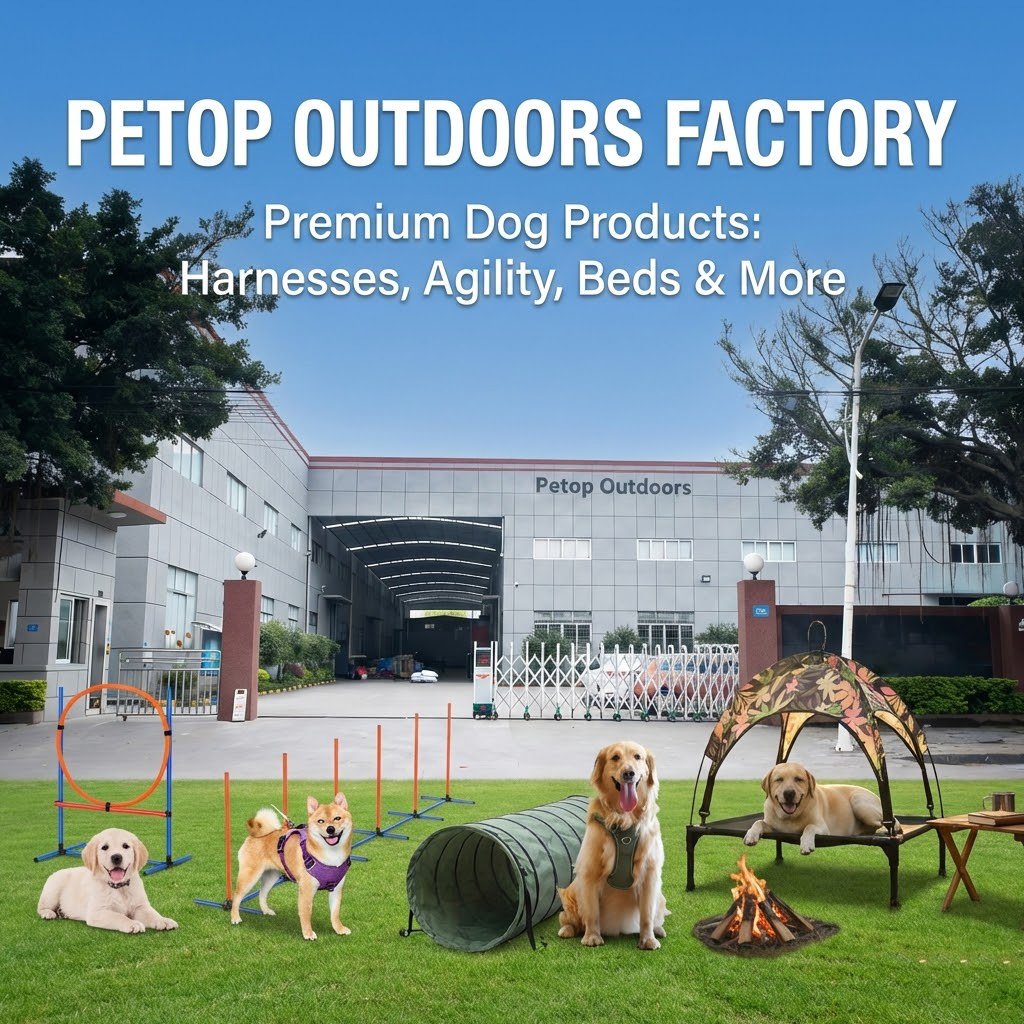
Located in the Pearl River Delta of Guangdong, China—the world’s most advanced industrial manufacturing hub—Petop Outdoors operates as the premier, consultant-led manufacturing engine behind global outdoor pet brands across North America, Europe, Australia, and growing markets like Costa Rica.
We do not merely take orders; we execute proactive Value Engineering. When you submit a Tech Pack for an escape-proof harness line, our engineering division implements strict factory-floor protocols to eliminate liability:
1. Automated CNC Fabric & Webbing Cutting
To ensure the complex multi-point chassis fits every dog breed ergonomically, our facility utilizes computerized CNC precision cutters. Every panel of breathable 3D spacer mesh and military-grade 1000D nylon webbing is cut with millimeter accuracy, guaranteeing zero dimensional drift across bulk production runs.
2. Auto-Locking POM & Aerospace Aluminum Hardware
We source and stress-test high-friction adjustment sliders and heavy-duty POM quick-release buckles. Our hardware grips the webbing matrix firmly, eliminating “webbing creep” and ensuring that the customized fit chosen by the pet owner remains locked in place.
3. Programmable High-Density Bar-Tack Stitching
Every D-ring leash attachment point, grab handle, and strap junction on a Petop Outdoors harness undergoes automated bar-tack stitching. Inside our on-site testing laboratory, our harnesses undergo rigorous mechanical tensile pull-testing, routinely rated to withstand extreme pull forces without structural failure.
Scale Your Brand: Build a Comprehensive Outdoor Ecosystem
Consumers who invest in premium escape-proof harnesses are highly dedicated outdoor enthusiasts. Once your brand establishes trust through a fail-proof safety harness, expanding your catalog is the fastest way to increase Average Order Value (AOV).
Through our integrated OEM/ODM manufacturing infrastructure, Petop Outdoors allows brands to expand seamlessly into complementary active categories:
Elevated Outdoor Dog Folding Beds: Constructed with rust-proof frames and heavy-duty Teslin mesh, these cots lift dogs off hot asphalt or damp ground, providing critical thermal regulation after intense hikes.
Dog Agility Training Gear: High-grade, portable training equipment that appeals directly to active working-dog owners and canine sports competitors.
Ready to transition your product lines to factory-direct, escape-proof reliability? Contact the B2B procurement division at Petop Outdoors today to review your Tech Packs, request custom sample prototypes, and secure your competitive edge.
🌞 www.petopoutdoors.com
📧 info@petopoutdoors.com
📞 WhatsApp: +86 15626945905
Frequently Asked Questions (FAQ) for B2B Sourcing Managers
Q1: What structural design makes a dog harness genuinely escape-proof?
A: A dog harness is made escape-proof by incorporating an extended chassis featuring a third circumferential adjustment strap. This third strap secures snugly around the narrow waist behind the dog’s ribcage, making it anatomically impossible for the dog to slip or back out of the harness.
Q2: How do premium manufacturers prevent adjustment buckles from loosening over time?
A: Premium manufacturers prevent “webbing creep” by pairing textured, high-denier nylon webbing with auto-locking POM polymer sliders or anodized aluminum hardware. This creates high friction tolerance that locks the strap in place, even under repetitive pulling.
Q3: What quality control pull-tests should an OEM dog harness undergo?
A: Safety harnesses must undergo automated mechanical tensile pull-testing inside a quality control lab. The webbing, buckles, and bar-tack stitching joints should be validated to endure dynamic pulling forces exceeding safety thresholds (often tested to 300+ lbs depending on breed size grading).
Q4: Can Petop Outdoors manufacture custom private label escape-proof harnesses?
A: Yes. We provide full OEM/ODM manufacturing services. Procurement managers can specify custom Pantone colorways, integrated 3M reflective trims, specialized tactical handles, and custom brand markings via woven labels, laser-engraved buckles, or injection-molded rubber badges.
Q5: Why is CNC automated cutting critical for manufacturing multi-strap dog harnesses?
A: Multi-strap escape-proof harnesses rely on precise geometric angles to prevent skin chafing and secure the torso. Automated CNC cutting eliminates the human error inherent in manual cutting, guaranteeing exact dimensional consistency across bulk orders of 1,000 or 100,000 units.
Q6: What complementary products should a brand source alongside escape-proof dog harnesses?
A: Brands should cross-source items that cater to the active outdoor pet demographic. Top complementary OEM products include elevated outdoor dog folding beds for campsite cooling and durable agility training equipment, both manufactured to the same rigorous standards inside our facility.