

WhatsApp:+86 15626945905
Executive Summary
The global camping dog bed market is booming—about $780M in 2026 with a 6.8% CAGR. Growing pet-ownership and outdoor recreation trends are driving demand. This guide helps B2B and retail buyers select the right gear by comparing types of dog beds (pads, elevated cots, foldable loungers, insulated mats) and analyzing key features (materials, size, weight capacity, durability, cleaning, packability). We emphasize manufacturer insights and standards: e.g. robust frames (steel/aluminum), high-denier fabrics (600D+ for puncture resistance), and waterproof coatings (PU/PVC). By addressing retail buyers, outdoor specialty retailers, and distributors, this data-driven guide ensures you understand pack sizes, ISO 9001-quality production, OEM/ODM capabilities, and lead-time considerations.
Why Choosing the Right Camping Dog Bed Matters
A quality camping dog bed ensures pet comfort, safety, and health on outdoor trips. Dogs need proper insulation from cold/hot ground, joint support for hiking activities, and protection from moisture or insects. A well-designed bed prevents aches and keeps pets relaxed, letting owners enjoy camping without worries. For B2B buyers, selecting the right beds can differentiate a product line: top-tier materials (e.g. water-resistant Textilene mesh) and durable construction signal quality. In contrast, cheap poorly-made pads may tear or offer no support, leading to customer returns. Ultimately, choosing the right camping bed maximizes pet well-being and customer satisfaction, which boosts brand reputation and sales. (Manufacturers like Petop Outdoors note that each model is tested for “strong support” and built with “clear structural logic and material standards”.)
Types of Camping Dog Beds
Camping dog beds come in several styles. Choosing the right category depends on the dog’s size, sleeping habits, and trip type. Key types include:
- Travel Mats / Pillow-Style Beds: These are soft, flat pads or pillows that can roll up or stuff into a sack. They are lightweight and affordable. For example, a Chuckit! Travel Dog Bed is just ~2.6 lbs and packs down small. Such pads often have dual-sided covers (fleece/nylon) and some insulation. They excel for car camping or backyard use where warmth is moderate. However, they offer minimal elevation or robust support. A common trade-off is durability – cheap pads may snag on tent floors and usually lack waterproofing.
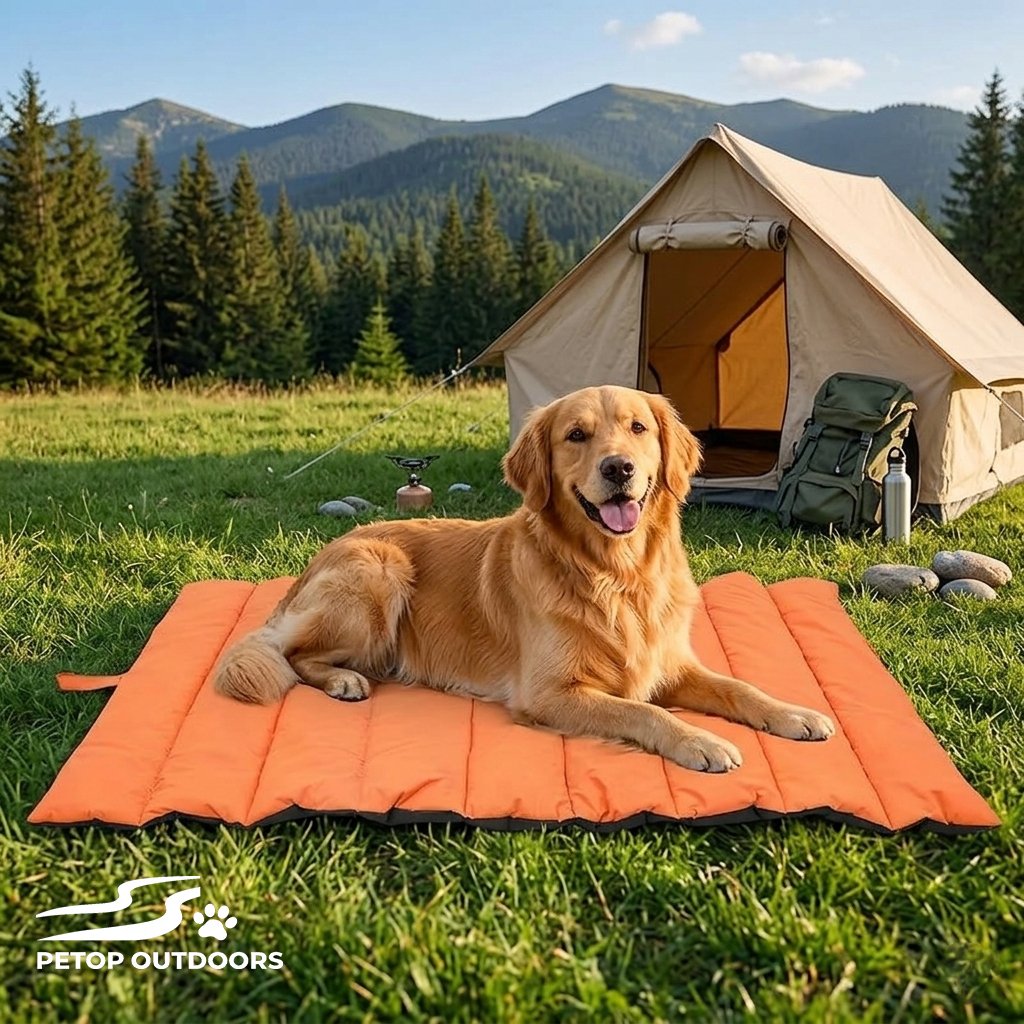
- Insulated Sleeping Pads: Similar to human camping pads, these use closed-cell foam or insulated layers to protect against cold ground. For backpacking dog owners, a pad like the Ruffwear Highlands Dog Pad weighs only ~0.75–1 lb and folds accordion-style. It offers thermal insulation (high R-value) while remaining packable. Downsides: very thin support (“not a ton of support”) and often “hand-wash only” covers. These are ideal for ultralight and winter use (the foam retains heat).
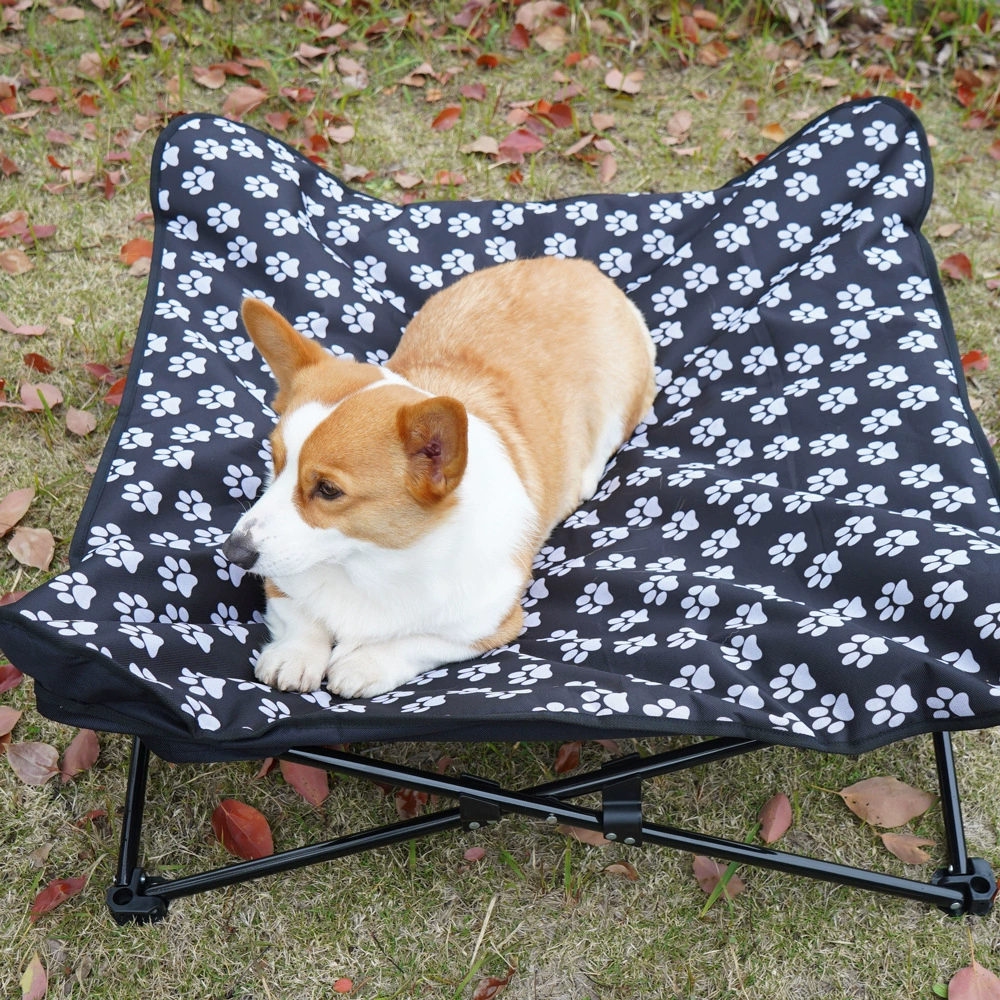
- Elevated Camping Cots: These lift the dog off the ground on a fabric platform supported by a frame. For example, the Ruffwear Mt. EverRest Cot uses an aluminum frame and 150D waterproof fabric; it weighs ~2.6 lbs (38×30 in) and supports ~70 lb dogs. Cots keep dogs cool (airflows underneath) and dry (off wet ground), which is great in summer or rain. They also stay cleaner since pets aren’t on the ground. However, cots are bulkier than pads: even a light cot still has poles and a carrying bag. Large breeds or multiple dogs may need sturdier steel-frame cots (Petop Outdoors’s clients use steel/aluminum designs for heavy loads).
- Foldable Loungers / Pet Chairs: These resemble a camping chair or chaise for dogs. They often have padded backs and sides (like the KUMA Lazy Bear chair-bed), and fold like an over-sized chair. The Kuma bed weighs ~13 lbs and fits dogs up to 175 lbs – so it’s quite heavy but very sturdy with a padded frame and thick polyester fabric. These are excellent for campfire lounging and indoor/outdoor versatility. Cleaning can be a hassle (spot clean only), but removable pads help. Use loungers when weight and bulk are less a concern (e.g. car camping); they offer plush comfort comparable to home.
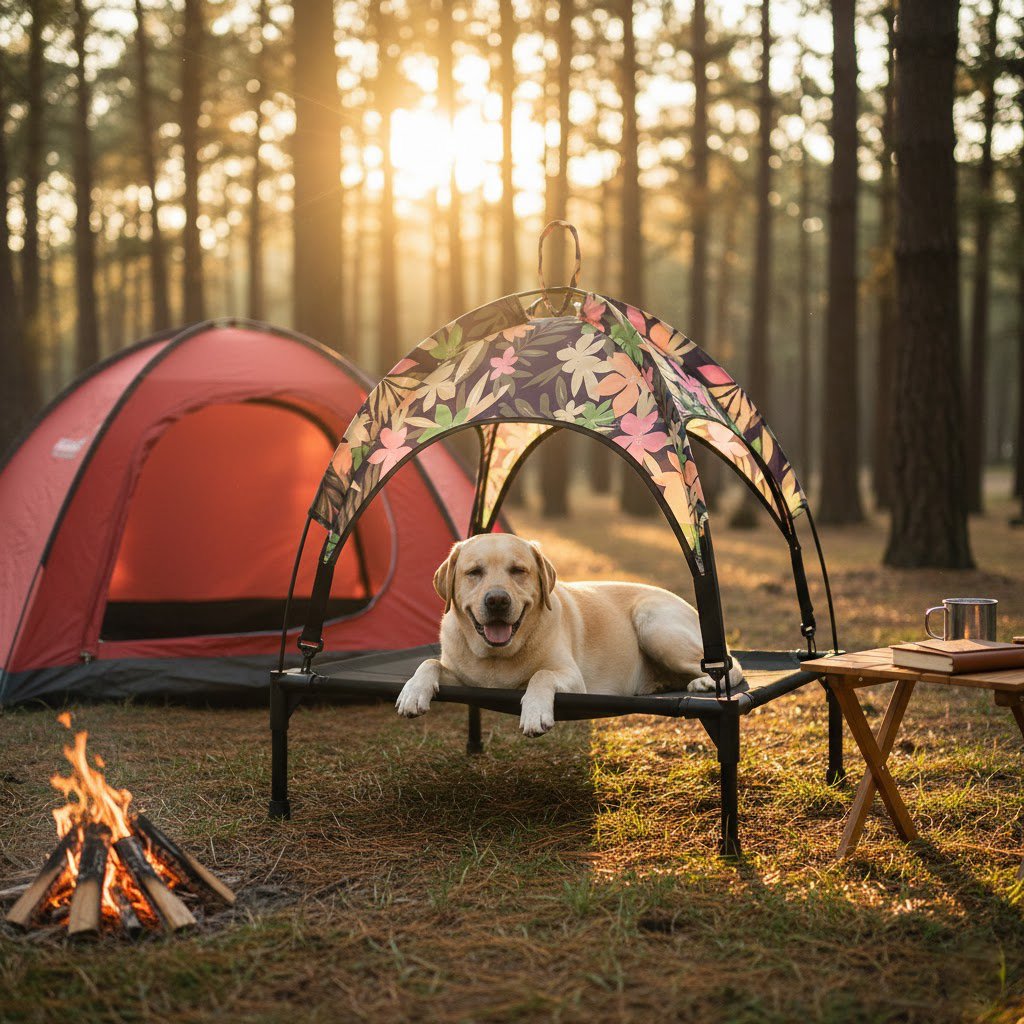
- Sleeping Bag Beds: Some designs integrate a sleeping bag or canopy (e.g. beds with UPF-rated tents over them). These provide weather protection and extra warmth. They are typically specialized, with integrated shelters (canopies) and heavier weight. They appeal to serious campers who want a 2-in-1 solution. (For example, Petop Outdoors offers “Elevated Dog Bed with Shade Tent” for full outdoor use.)
Key Features to Consider in Camping Dog Beds
When evaluating camping dog beds, check the following attributes carefully:
- Size & Weight Capacity: Choose a bed longer and wider than your dog’s body length. Manufacturers often offer multiple sizes aligned to weight classes(e.g. small, medium, large, XL). Ensure the stated weight capacity exceeds your dog’s weight (a good rule is ~25% above to allow active movement). For example, the Kuma Lazy Bear is rated up to 175 lbs, while smaller cots like the Ruffwear Mt. EverRest are designed for dogs ≤70 lbs. Always verify actual product dimensions and capacity – check spec sheets from the factory or brand.
- Materials & Construction: Look for durable fabrics like polyester Oxford (300D–600D) or Textilene mesh (for breathability). Higher denier (D) generally means more puncture- and tear-resistance; 600D+ is common for rugged use. Waterproof or water-resistant coatings (PU/PVC laminate) are a plus for spills and dew. The frame should be sturdy: steel tubing or aluminum alloys are preferred over cheap plastics, especially for larger dogs. Quality beds have reinforced stitching and firm fabric attachment to frame. Check that seams are double-stitched and stress points (corners, joints) are reinforced. Also inspect the filling: foam types vary. Memory foam (like the HEST bed) offers comfort but adds weight; closed-cell foam is light and insulative (as in backpacker pads). Fabric coverings should be snug (with shock cords or straps to prevent sagging).
- Comfort & Insulation: Does the bed have padding or insulation? Many pads include polyester/polyfill or foam layers. Insulated beds are rated by R-value or thickness; for cold-weather camping, aim for insulated pads (R-2 or higher) to keep dogs warm. Memory-foam beds (luxury style) excel in support for older dogs but pack bulkier. Verify if covers are soft against fur – microsuede or fleece top layers add comfort, though they may attract hair. Also consider add-ons: some cots allow inserting a removable pad or sleeping bag for extra warmth.
- Durability & Weather Resistance: An outdoor bed should resist dirt, UV, moisture, and chewing/snags. Water-resistant fabrics and water-repellent zippers help; look for “quick-dry” or “waterproof” labels (IPX4 or better). High-end beds pass durability tests: for instance, the HEST memory foam bed endured “5000+ compression cycles” with no seam failure. When checking materials, verify colorfastness and UV resistance. If used in sun, UV-stable fabrics prevent fade. By comparison, many budget pads tear easily – choose ripstop weave or rubberized undersides to prevent punctures. Note that “very washable” models (like machine-washable covers on some elevated beds) are often built sturdier.
- Portability & Packability: Weight and folded size are crucial for camping. Backpackers want beds under ~3 lbs; car campers can handle heavier cots. Check packed volume: ideally a pad should compress to ~12×6×6 inches or less, and a cot to a narrow bag. Built-in straps or compression sacks are helpful (Ruffwear Highlands has velcro straps). Manufacturers often design for compact packing– Petop notes “pack small to reduce shipping costs,” which also benefits retailers. For trade buyers, note that larger, bulkier beds (over 10 lbs) may incur higher shipping and storage costs.
- Ease of Cleaning: Camping beds get dirty, so removable and washable covers are a plus. Some beds (like the HEST and Ruffwear cot) have machine-washable covers. Others need spot-cleaning or hand-wash. Non-slip feet or elevated designs reduce soiling. If possible, choose models with waterproof bottoms or covers that repel moisture and hair. Remember that mats with foam cores (non-removable) cannot be machine dried and may absorb odors.
- Price Ranges: Budget travel mats can be under $30 (e.g. basic pillow pads), mid-range foam beds $50–100, and high-end cots or memory-foam beds $150–250+. Higher price often reflects better materials, brand, or unique features (integrated canopy, heavy-duty frame, etc.). Evaluate lifetime value: a $200 bed with 5+ years life and warranty might be more cost-effective than repeatedly replacing a $30 pad. For trade, consider MOQ and cost breaks.

Partner with Our Factory for Camping Dog Beds
If you are a retailer, distributor, or brand seeking a reliable manufacturing partner, Petop Outdoors offer competitive OEM/ODM dog bed solutions:
- MOQ and Flexibility: Standard MOQ is 300 pieces per color per model.
- Customization (OEM/ODM): We support custom branding (logo embroidery/print), fabric selection (memory foam, Oxford, Textilene, mesh), colors, and packaging. Our R&D team can modify dimensions and features to your requirements.
- Lead Time: Standard production lead time is 30–45 days after order confirmation. (Rush orders can be accommodated at a small premium.) Each order is tracked through production and quality control.
- Contact Us: To get started, send your requirements (model ideas, quantities, target markets) via [Contact Us] or email info@petopoutdoors.com. We pride ourselves on responsive service and factory-level competitive pricing. Partner with our experienced team to expand your camping dog bed line with confidence!
✨️ www.petopoutdoors.com
📧 info@petopoutdoors.com
📞 WhatsApp: +86 15626945905